
Explore Short Courses
Develop practical semiconductor expertise through focused short courses taught by leading industry professionals and researchers worldwide.
Registration
Short Courses | Sunday, December 13th
Short Course 1 Logic and System Innovations Powering the AI Era
Expand technical skills through expert, focused semiconductor short courses.
Course 1.1 - Distributed Network Design for AI: Evolution, Scaling, and System Implications

As AI systems scale from a single die to packages, boards, racks, and eventually warehouse-scale deployments, the dominant challenge increasingly shifts from compute alone to efficient data movement across every level of the system. This talk begins with a retrospective…
Read More
Course 1.2 - Advanced Logic Scaling in the Angstrom Era: From RibbonFET to 3D-Integrated Logic and Beyond

The relentless demand for energy-efficient computing, driven by AI and high-performance applications, continues to push logic technology beyond conventional scaling limits. The transition from planar FETs to FinFETs, and now to gate-all-around (GAA) transistors, has enabled substantial improvements in performance,…
Read More
Course 1.3 - Edge Device Performance/Power Enhancement in Mobile SOC platform through Device to DTCO to STCO

With the rapid growth of AI, the rising demand for real-time, intelligent applications has made edge AI computing a critical enabler of next-generation user experiences. This discussion reviews how process technology evolution—through innovative transistor architectures (from planar to FinFET to…
Read More
Course 1.4 - Atomic Layer Processing: Application to Advanced Semiconductor Devices

Monolithic 3D integration is one of the vectors to advance device density of logic and memory integrated circuits. 3D integration requires vertical and lateral processing. In addition to deposition of tall stacks with alternating layers and high aspect ratio (HAR)…
Read More
Course 1.5 - Reliability Challenges in Advanced Packaging and System-Level Interaction

Advanced packaging enables the high-performance computing essential for next-generation AI, but it also increases system complexity. As form factors expand and power densities rise, new system-level reliability challenges emerge—specifically regarding thermal management and thermomechanical stress. This tutorial discusses the various…
Read More
Course 1.6 - Cryogenic electronics for quantum computing

Stable, accurate, and precise signal delivery is at the heart of state-of-the-art superconducting quantum processors with tens of quantum bits. In today’s flagship architectures, the experimental setup—comprising cryogenics, wiring, filtering, and room-temperature electronics—is as critical as the design of the…
Read More
Short Course 2 Powering Next-Generation AI and HPC with Advanced Memory Technologies
Course 2.1 - Memory-Centric Computing for the Generative AI Era

Generative AI is changing the meaning of in-memory computing. For more than a decade, the field has been motivated by the mapping of neural-network weights to dense matrix-vector multiplications in memory arrays. This remains essential, but it is no longer…
Read More
Course 2.2 - HBM Design and Technology Challenges for AI Generation

The rapid advancement of AI has driven an exponential surge in data usage, placing unprecedented demands on memory subsystems. While High Bandwidth Memory (HBM) was engineered for high-throughput data processing, it faces escalating development challenges. From a design perspective, these…
Read More
Course 2.3 - Oxide-Semiconductor Channel Transistor DRAM (OCTRAM): High-Density and Low-Power Consumption DRAM Technology for Sub-10nm nodes and Beyond

In recent years, the scaling of conventional DRAM beyond the sub-10nm node has encountered significant barriers, primarily due to challenges in process integration and electrical performance. To address these issues, DRAM technology leveraging the oxide semiconductor Indium Gallium Zinc Oxide…
Read More
Course 2.4 - The Evolving Role of NAND: Technology and System Scaling from Traditional Storage to Memory-Storage Convergence

As artificial intelligence (AI) reshapes computing and datacenter architectures, the demands placed on storage systems are evolving well beyond traditional storage system specifications. NAND flash, long the cornerstone of the storage hierarchy, now faces new system-level requirements driven by AI…
Read More
Course 2.5 - Spintronics for MRAM and Beyond
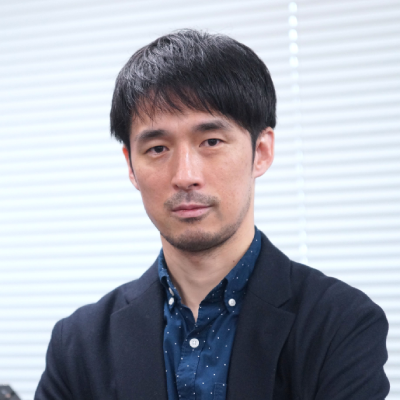
Spintronics is a field that harnesses both the charge and spin degrees of freedom of electrons to realize novel physical phenomena and advanced device functionalities. While long established in applications such as magnetic sensors, spintronics has more recently evolved into…
Read More
Course 2.6 - Chiplet & Advanced Packaging Technologies for AI & HPC Systems

Energy efficient AI data centers to support high performance computing, large language models and 500 billion parameter model algorithms require scaling high bandwidth density electrical and optical interconnections. The solutions take advantage of next generations of heterogeneous integration chiplet technology…
Read More